Why eat vegetarian
What benefits can vegetarian eating offer, and what needs attention for a balanced diet? Read the summaries, explore the evidence or compare nutrients in the foods below.
Jump to the nutrition comparison
Vegetarian eating and your health
For information only, not a substitute for advice from a doctor or dietitian. People with medical conditions, or who are pregnant or feeding small children, should ask a professional before changing their diet.
Combine a variety of foods
Vegetarian eating can provide adequate nutrition with careful planning, which takes more than food variety alone. Vegans need a dependable source of vitamin B12.Position of the Academy of Nutrition and Dietetics: Vegetarian Diets (J Acad Nutr Diet 2016;116(12):1970-1980)Melina V, Craig W, Levin S; Academy of Nutrition and DieteticsAll references
Evidence and limitations
A 2016 Academy of Nutrition and Dietetics position stated that vegetarian and vegan diets can provide adequate nutrition when foods are planned and combined appropriately.
Needs change with age
Vegetarian eating can suit many stages of life, including pregnancy, breastfeeding and sport. Each stage has its own needs, so ask a doctor or dietitian when you are unsure.Position of the Academy of Nutrition and Dietetics: Vegetarian Diets (J Acad Nutr Diet 2016;116(12):1970-1980)Melina V, Craig W, Levin S; Academy of Nutrition and DieteticsAll references
Evidence and limitations
The 2016 position also stated that well-planned vegetarian diets can suit different life stages, including pregnancy, breastfeeding and sports. Needs differ at each stage, so individual guidance may be needed.
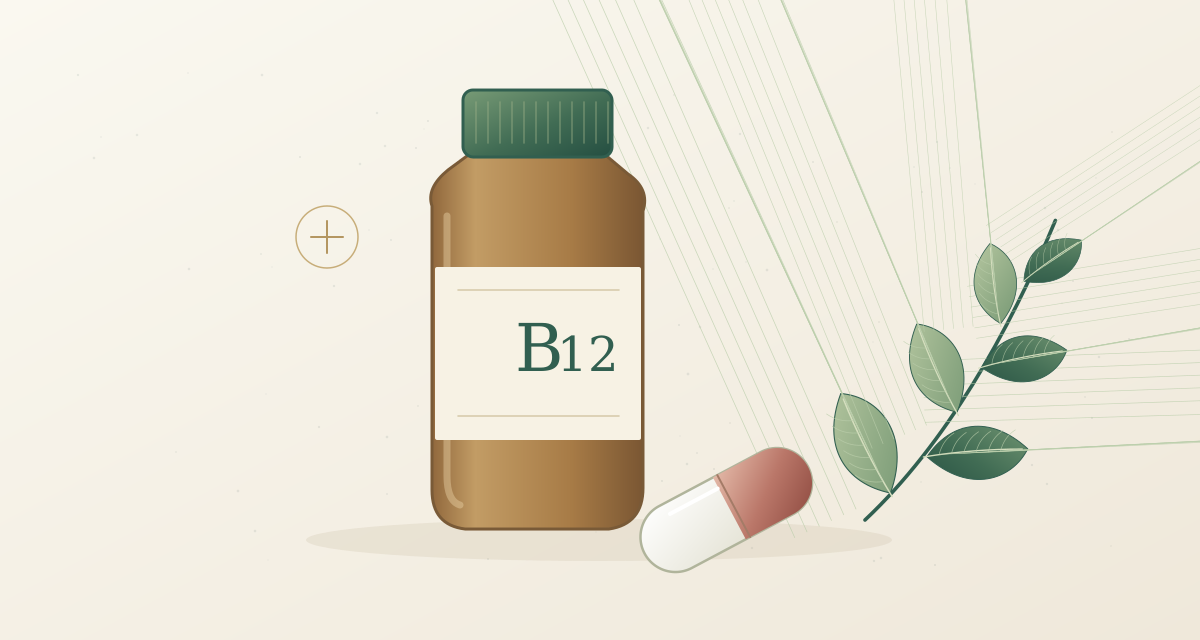
Remember vitamin B12
Vegans need foods with added vitamin B12 or a supplement. Vegetarians who eat dairy and eggs also need to make sure they get enough of this vitamin.Position of the Academy of Nutrition and Dietetics: Vegetarian Diets (J Acad Nutr Diet 2016;116(12):1970-1980)Melina V, Craig W, Levin S; Academy of Nutrition and DieteticsAll references
Evidence and limitations
Vegans need a reliable source of vitamin B12, such as foods with added B12 or supplements. Vegetarians who eat dairy and eggs also need to ensure an adequate B12 intake; simply including these foods does not show whether the total amount is sufficient.
Environmental impact
Eating mostly plants is generally gentler on the environment: it takes fewer natural resources and does less harm.Position of the Academy of Nutrition and Dietetics: Vegetarian Diets (J Acad Nutr Diet 2016;116(12):1970-1980)Melina V, Craig W, Levin S; Academy of Nutrition and DieteticsAll references
Evidence and limitations
Plant-based diets use fewer natural resources and are linked to much less environmental damage than diets rich in animal products.
Vegetarian eating and heart health
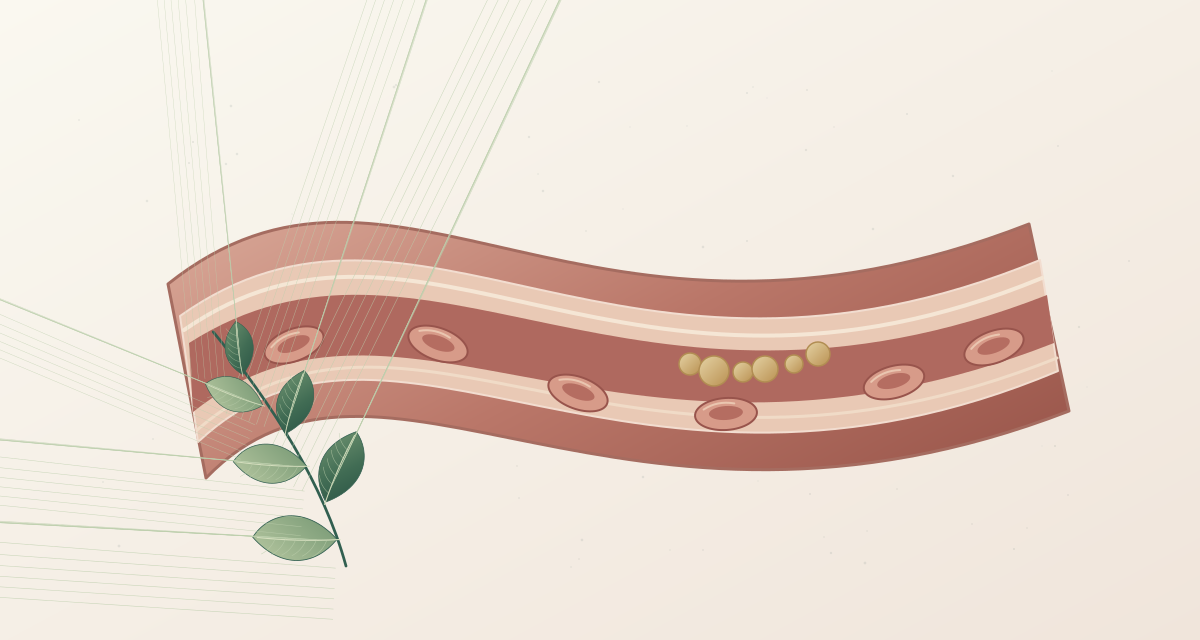
The cited studies found less heart disease caused by reduced blood flow in vegetarians. This observed link does not prove that vegetarian eating is the cause or reduces every kind of cardiovascular disease.Vegetarian, vegan diets and multiple health outcomes: A systematic review with meta-analysis of observational studies (Crit Rev Food Sci Nutr 2017;57(17):3640-3649)Dinu M, Abbate R, Gensini GF, Casini A, Sofi FAll references
Evidence and limitations
A review published in 2017 of follow-up studies found about 25% lower risk of developing or dying from heart disease caused by reduced blood flow in vegetarians. This was an observed difference; it does not prove vegetarian eating caused it. It found no clear difference in overall cardiovascular disease or all-cause mortality.
Weight, blood fats and blood sugar
The cited studies found lower weight relative to height, blood fat and blood sugar in vegetarians. This does not mean everyone who eats vegetarian will lose weight or lower their blood sugar.Vegetarian, vegan diets and multiple health outcomes: A systematic review with meta-analysis of observational studies (Crit Rev Food Sci Nutr 2017;57(17):3640-3649)Dinu M, Abbate R, Gensini GF, Casini A, Sofi FAll references
Evidence and limitations
In a review published in 2017, studies measuring people at one point in time found lower body mass index (weight relative to height), blood cholesterol and blood sugar in vegetarians and vegans than in people who ate meat. LDL, often called bad cholesterol, was also lower. These cross-sectional observations do not establish cause and effect.
Vegetarian eating may be linked to lower cancer rates
The cited review found lower overall cancer rates in vegetarians, without proving cause and effect. In that review, results for individual cancer types were unclear.Vegetarian, vegan diets and multiple health outcomes: A systematic review with meta-analysis of observational studies (Crit Rev Food Sci Nutr 2017;57(17):3640-3649)Dinu M, Abbate R, Gensini GF, Casini A, Sofi FAll references
Evidence and limitations
The review published in 2017 found about 8% lower overall cancer rates in vegetarians and about 15% lower rates in vegans. The vegan result came from only a few studies. In that review, no clear difference was found for individual cancer types. These are relative risk reductions, not percentage-point reductions in absolute risk; observational data cannot establish causation.
“Bad” fat in the blood
In the cited studies, vegetarian eating reduced “bad” blood fat. Changes differ from person to person and also depend on food choices.Effects of Vegetarian Diets on Blood Lipids: A Systematic Review and Meta-Analysis of Randomized Controlled Trials (J Am Heart Assoc 2015;4(10):e002408)Wang F, Zheng J, Yang B, Jiang J, Fu Y, Li DAll references
Evidence and limitations
A 2015 review of 11 randomized controlled trials found that vegetarian diets lowered total cholesterol by about 0.36 mmol/L and LDL (bad cholesterol) by about 0.34 mmol/L. HDL (good cholesterol) also fell slightly, by about 0.10 mmol/L. Triglycerides, another type of blood fat, did not change clearly.
Nutrients to watch
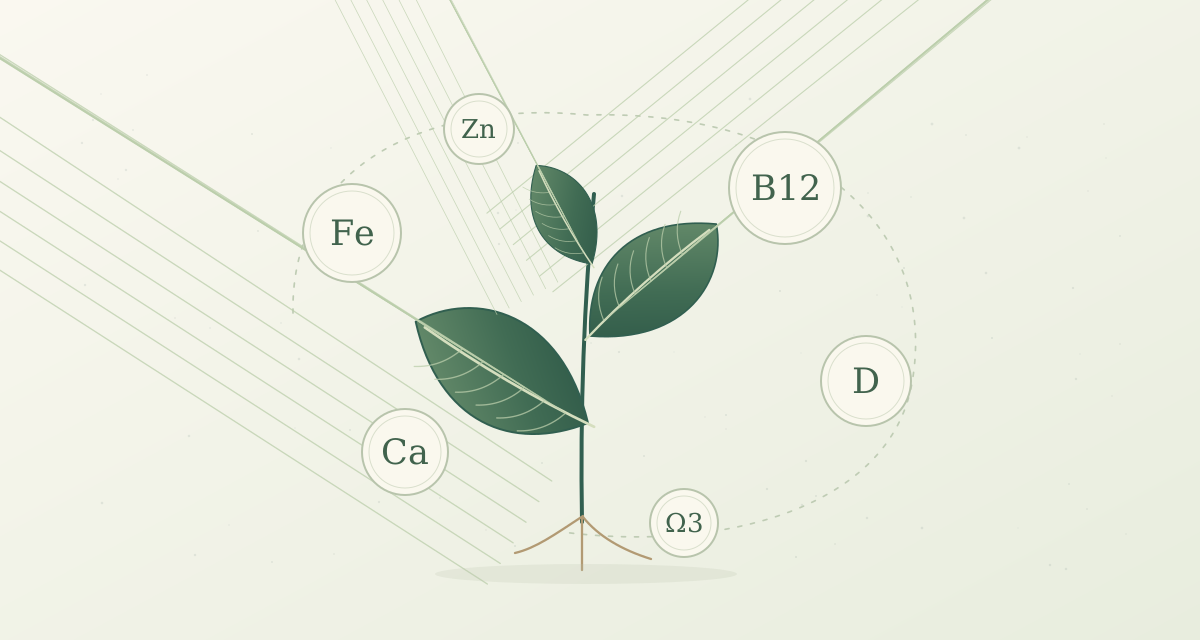
On a vegetarian diet, pay a little attention to vitamin B12, vitamin D, omega-3, calcium, iron and zinc. A well-planned menu, foods with added nutrients, or supplements when needed can help you get enough.Nutrition concerns and health effects of vegetarian diets (Nutr Clin Pract 2010;25(6):613-620)Craig WJPosition paper on vegetarian diets from the working group of the Italian Society of Human Nutrition (Nutr Metab Cardiovasc Dis 2017;27(12):1037-1052)Agnoli C, Baroni L, Bertini I, et al.All references
Evidence and limitations
Vitamin B12, vitamin D, omega-3 fats, calcium, iron and zinc need attention on a vegetarian diet. Reviews suggest a well-planned diet, foods with added nutrients or supplements where needed can help meet these needs.

Compare nutrients in everyday foods
Compare 13 plant foods and 8 animal foods by the same weight or calories, using USDA data.
Comparing equal weights and taking the most favourable value in each group: plant foods stand out for 10 nutrients, are similar for 1, and animal foods stand out for 1. This is not a score for an entire diet.
A comparison for each nutrient
Per 100 g. Each side uses the best food in the list below, not the average of the whole group. “Similar” means the two values are within 15% of each other.
| Nutrient | Plant food | Animal food | Result |
|---|---|---|---|
| Protein | Pumpkin seed kernels, dried30.23 g | Chicken breast, roasted31.02 g | Similar |
| Iron | Pumpkin seed kernels, dried8.82 mg | Ground beef 85% lean, pan-broiled2.68 mg | Plant food stands out |
| Calcium | Firm tofu (calcium sulfate)683 mg | Plain whole-milk yogurt121 mg | Plant food stands out |
| Zinc | Pumpkin seed kernels, dried7.81 mg | Ground beef 85% lean, pan-broiled6.2 mg | Plant food stands out |
| Magnesium | Pumpkin seed kernels, dried592 mg | Shrimp, boiled37 mg | Plant food stands out |
| Folate (vitamin B9) | Lentils, boiled181 µg | Hen egg, hard-boiled44 µg | Plant food stands out |
| Potassium | Pumpkin seed kernels, dried809 mg | Pork tenderloin, lean, roasted421 mg | Plant food stands out |
| Fibre | Black beans, boiled8.7 g | Chicken breast, roasted0 g | Plant food stands out |
| Saturated fat | Spinach, boiled0.04 g | Shrimp, boiled0.52 g | Plant food stands out |
| Cholesterol | Firm tofu (calcium sulfate)0 mg | Whole cow milk10 mg | Plant food stands out |
| Vitamin C | Broccoli, boiled64.9 mg | Farmed Atlantic salmon, cooked3.7 mg | Plant food stands out |
| Vitamin B12 | Tempeh, cooked0.14 µg | Farmed Atlantic salmon, cooked2.8 µg | Animal food stands out |
Chicken breast and lean meat have more protein per 100 g, but tofu, tempeh and edamame still give a solid amount. Plant protein is digested a little less well, so vegetarians may need somewhat more than the general recommendation and should mix beans, soy, nuts and grains.
FoodData CentralU.S. Department of Agriculture, Agricultural Research ServicePosition paper on vegetarian diets from the working group of the Italian Society of Human Nutrition (Nutr Metab Cardiovasc Dis 2017;27(12):1037-1052)Agnoli C, Baroni L, Bertini I, et al.All referencesData: USDA FoodData Central, SR Legacy (April 2018), per 100 g of edible food.FoodData CentralU.S. Department of Agriculture, Agricultural Research ServiceAll references